Nov 2020
Egregious Imprudence
Some weapons should never be given a mind of their own.
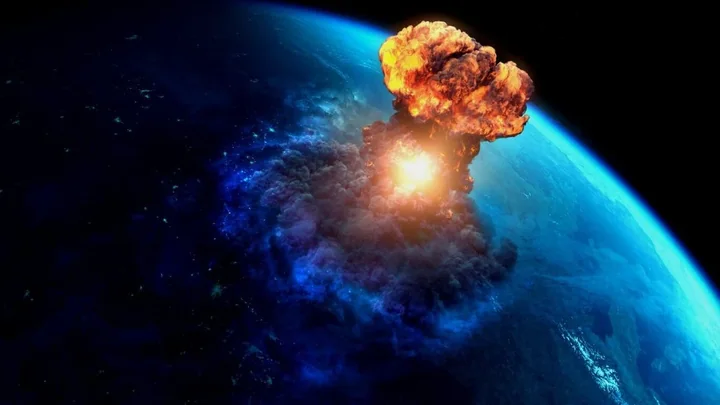
Thermonuclear madness is back in fashion
Generations since WW2 grew up with the looming existential terror of sudden nuclear annihilation without warning.
Since the dissolution of the USSR in 1991, little thought has been given to such concerns. That may be about to change.
The Russian Navy is developing an autonomous, nuclear-powered submarine carrying a nuclear warhead with a reported yield of 2 to 90 megatons, potentially even greater than the largest nuclear bomb ever detonated, the Tsar Bomba (50 megatons).
The damage would be far worse than that of a typical airborne MIRV warhead. Water is essentially incompressible; one of these warheads could, by some estimates, create an enormous wall of superheated steam and water capable of destroying half the US seaboard, or all of Western Europe, in a single blast.
The bomb has also reportedly been designed to salt land and sea with long-half-life isotopes, leaving both uninhabitable for decades or centuries.
The Russian Navy plans to deploy 30 of these devices in the coming years.
The latest Russian Navy submarines can deploy the weapon far from home, and because it is nuclear powered and autonomous it can roam for months at a time, potentially even years. Similar nuclear-propelled, nuclear-armed airborne versions are also under active development.
Editorial note (2026): in late October 2025 Russia announced tests of both weapons described here, the Burevestnik nuclear-powered cruise missile and the Poseidon underwater vehicle, whose nuclear power unit was said to have been started for the first time. On 1 November 2025 the Khabarovsk, the submarine built to carry Poseidon, was launched at the Sevmash shipyard ahead of sea trials. The claims about both weapons came from Russian officials and were not independently verified.
Putting such a weapon in the hands of AI control seems like a very bad idea.
Yes, even an autonomous weapon must surely have manual interlocks that prevent detonation without the right signal.
But the more tightly the world’s systems are coupled, the stranger the ways they can fail.
Such weapons could be set to Dead Hand mode (retaliating automatically if their commanders fall silent) during a period of high nuclear alert, which the world has come close to many times in history, and then refuse to stand down afterwards (or go stealth to such a degree that they cannot be located).
Even in a time of peace and geopolitical détente, a Carrington Event-style solar flare might create such havoc and panic in defence networks that the weapon enters a Dead Hand mode which cannot be shut down afterwards, as the requisite satellite downlinks to communicate with it are destroyed.
Autonomous WMDs are an egregiously imprudent development affecting all of humanity, and must be banned immediately.
Correspondence
Or send Nell a private note (only Nell and the editorial team see it).
← All essays