Aug 2014
Locust Scenarios
One hijacked drone is a nuisance. A thousand running the same code can be hijacked at once.
A NEW ERA OF ASYNCHRONOUS CONFLICT
Even very modest machine intelligences can create surprising outcomes if granted full autonomy.
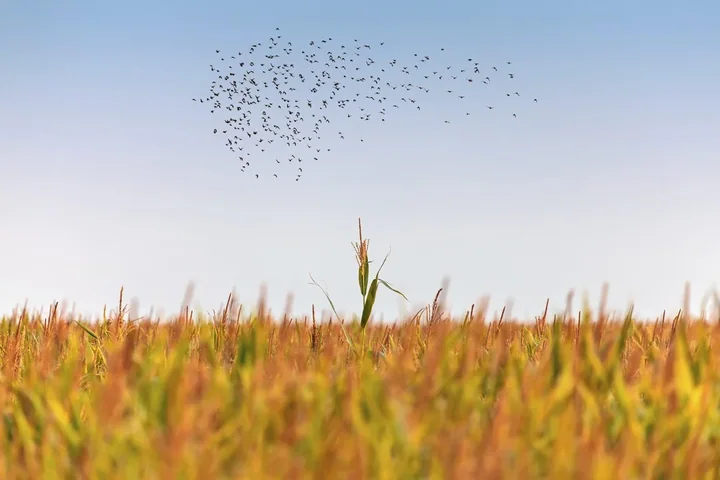
Think of a swarm of locusts: not intelligent like we are, yet driven by simple ‘utility functions’ to consume and propagate, and, most importantly, adapt. The analogy of an AI-controlled ‘swarm of locusts’ could literally be implemented: researchers are already experimenting with born-cyborg moths.
Several factors in combination increase the risk of an AI event, even with sub-sapient machine intelligence.
Common drones and autos in our physical world (of multiple form factors, capabilities, locations)
Distributed processors capable of running instances of neuromorphic code (self-learning, self-editing, self-healing)
(Conversely) Single Point of Failure Cloud-based intelligence, and a major exploit
Vulnerabilities created by Intelligence Community backdoors
Common software and hardware architectures (Robot OSs, Open Hardware)
Economic incentives creating a fraud and extortion sub-culture that encourages discovery and exploitation of vulnerabilities
Unlikely to ‘turn everyone into paperclips’, but periodic locust scenarios could create terror and unrest that put societies under strain.
Hacking of internet infrastructure and the creation of intentional backdoors by the Intelligence Community leave the entire world at greater risk of the infrastructure being monitored and controlled by an AI entity, or of some or all of it being ‘bricked’ and rendered useless.
In fact, there appears to be evidence of intention to create a system that can function in such a manner.
As the Internet of Things proliferates, we can expect practically every drone to be infiltrated by intelligence services, just as practically every phone is today.
Centralised repositories of semantic self-improving knowledge connected to thousands or millions of end points create a single point of failure. Today, a rogue worm might wipe your hard drive. Tomorrow, it might run you off the road.
Today, botnets and ransomware are used for digital stick-ups: “send money, or we’ll ruin your business/personal life.” These extortion tactics work. Tomorrow, real bots might be hijacked to mug individuals, or worse, to conduct acts of micro-terrorism: the ultimate protection racket.
The economic conditions post-2007 led to a sharp increase in digital fraud and extortion. With up to 45 per cent of jobs at risk of automation over the next decade, expect more crimes committed with a machine intelligence accomplice and drones, which, unlike robbery in person, rarely expose the offender to significant risk and can self-destruct if captured.
Drone missions may even be planned beforehand in virtual worlds, simulating a broad range of scenarios prior to final execution.
Editorial note (2026): that decade has passed. Automation has reshaped a great deal of work, but jobs were not lost on anything like the scale of that estimate.
Correspondence
To send Nell a private note, select any passage above and choose ✎ Note, or write about the essay as a whole. Only Nell and the editorial team see notes.
← All essays