Oct 2022
Cognitive Congruence
What happens when the latency between thinking and computing drops to nothing?
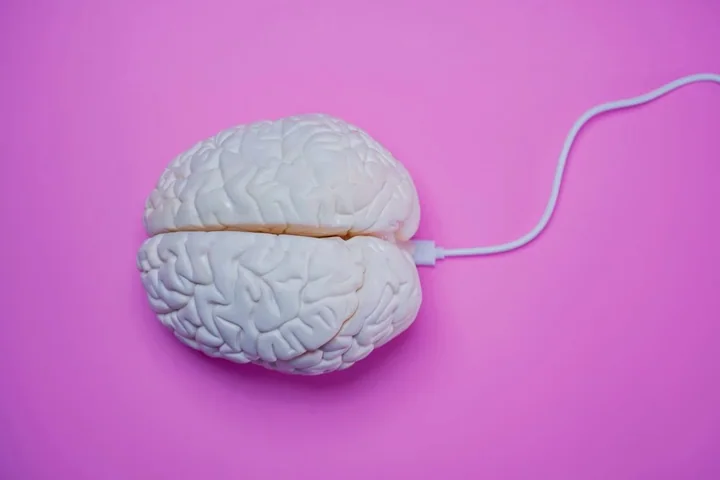
A whole extra hemisphere
As computers have improved, so have our interfaces with them. We moved from machine code to programming languages and OS commands, then to graphical point-and-click. Now prompt-driven interfaces let us conjure sophisticated multimodal outputs from pure natural language. At some point, we will not even need to speak or type; it will be feasible to engage with computers directly, at the speed of thought.
Brain-computer interfaces remain largely experimental, deployed mainly with people who have lost the ability to move or speak. For conditions like Locked-In Syndrome and Motor Neurone Disease, these technologies are a lifeline. By strobing through the letters of the alphabet, brainwave readers can discern a user’s intention to select a letter. Combined with predictive text, a practised user can spell out a sentence or two per minute — a crucial line of communication.
Beyond communication, BCI and biofeedback devices show promise for memory problems, Parkinson’s, mood and anxiety disorders, and serious depression.
The same technologies also offer a tantalising glimpse of increasingly intimate connections with and through machine media. BCIs may one day enable communication at the speed of thought, the transmission of feelings, and perhaps even the sharing of knowledge or biographical memories.
Much of the existing research involves neural implants requiring highly precise surgery under the skull. Anything so expensive and invasive is unlikely to take off outside dire medical necessity or the pursuit of specialist covert talents for military or espionage purposes. Neuralink and similar organisations seem focused on this niche.
Other forms of BCI read electrical brain waves through direct contact with skin. Traditionally this required saline solution, acceptable in a medical context where accuracy matters most. Advances in the consumer space have produced devices worn on the forehead or over the ears like eyeglasses, without incurring a bad hair day. These are commonly used as meditation aids, and may help with concentration too.
Experimental devices from companies such as OpenWater are non-contact, using specific frequencies of light as sensors for brain activity. These methods should enable radically more sophisticated monitoring of the brain, greatly increasing the bandwidth and reliability of brain-world interfaces.
It will be some time before businesses adopt these technologies. Immediate applications sit in the military and niche occupations requiring an ability to process large amounts of information with precision — certain domains of finance and medicine. But non-medical BCIs present immense ethical challenges, and we need to forecast the ramifications as best we can before they arrive.
If BCI becomes commonplace, people may be coerced into adopting it as an implied condition of employment. This could burden workers with still more overstimulation. Not everyone will be able to use BCI, and implanted technologies may go quickly out of date without an easy upgrade path. Imagine being stuck with the limitations of a first-generation smartphone for the rest of your life. The price of such technologies may also reinforce economic divides, rendering some people unemployable, or leading to indentured servitude for an employer willing to subsidise BCI as part of a work contract.
BCI could bring people together in ways otherwise impossible — radically improving empathy by letting us share in someone’s inner experience, or how they are feeling. It could also provide an instant form of accountability: if you felt the distress you had caused another person, you might be motivated to avoid causing it again.
Philosophers such as Jacques Ellul have observed that technology is sometimes employed to numb people to conditions they might otherwise find intolerable — an increasingly sophisticated form of age-old bread and circuses. BCI tech might be used to wirehead people into acquiescence in treatment that they would otherwise find highly objectionable. The ability to read thoughts may also compromise what little privacy remains in contemporary society. Potentially, such non-contact light-based systems could be used remotely by security forces to search for mendacious or politically/religiously dissenting thoughts. The potential for abuse is immense.
BCI technology could also streamline immersive interfaces and blended realities. It may enable augmented reality with no screen or lens at all, feeding the brain’s visual system directly rather than placing hardware in front of or inside the eye. It could let us tune our environment — turning down harsh sounds, say — without anything over our physical ears. These capabilities would give us more control over our personal experience, but they may also insulate us from stimuli in ways that prove unhelpful. A sudden breakdown of BCI tech could mean a jarring return to base reality.
Given the existing overreach of large tech platforms and authoritarian governments trampling human rights “for the benefit of society,” caution is warranted. Technology inevitably changes values, and BCI perhaps more than any technology before it. Our civilisation may be transformed in ways we cannot predict and would find objectionable by today’s standards. The future of BCI is exciting, and unsettling in equal measure.
Correspondence