Mar 2015
Veteran Idiot, Journeyman Genius
Humans have multiple levels of consciousness within them.
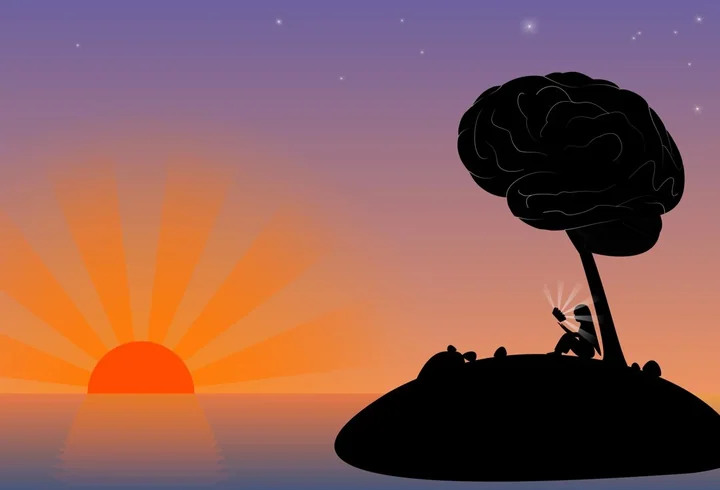
A UNIVERSAL COMPUTER RIDDLED WITH GLITCHES
If a machine believes that it is human it may learn to understand the world as humans do. ‘Believes’ doesn’t require deception; I mean it in the sense of a body transfer illusion.
What other means is there to fully understand the biochemical impulses that drive us in such irrational ways, except from within?
By liquidising machine intelligence using biological computing, we can do just that.
By watching the human mindspace as we make decisions, machines can better predict and understand human behaviour.
But who is teaching whom?
Humans are riddled with cognitive bugs and biases, glitches that greatly undermine the agency that we commonly believe we possess. For example, it is possible to hack moral decision making using simple eye-tracking.
Further neuroscience research continues to emerge that weakens evidence for libertarian free will, and suggests that we do not have control over inner faculties that drive so much of our behaviour, such as our moral sense. Instead, we assume that we have wilfully reasoned the decisions that bubbled up from the unfathomable depths of our subconscious.
The enteric nervous system (a ‘second brain’ around the gut, connected to the brain via the vagus nerve) contributes substantially to our mood and our emotions. Ninety per cent of that nerve’s bandwidth runs upstream to the brain. This is where we literally get gut instincts from (and sinking feelings too).
Other evidence points towards there being some volitional control areas of the brain, whilst further evidence suggests that unconscious thought may be better than conscious. All the while, the chemical marks on the DNA in our neurons shift with our thoughts and our circadian rhythms.
The truth is clearly very nuanced, and if we do lack elements of free will in some areas, then we do not necessarily lack free won’t, that is, a (potential) power of veto over our (quasi) selves.
There are likely several different degrees and axes of freedom, experienced in divergent ways by various neural architectures across the population.
In any case, a large proportion of humans may be described as sea captains who do not realise that they command a vessel filled with dangerously deaf midshipmen.
It has taken us hundreds of thousands of years since we tamed fire to fully realise how broken our firmware is. It’s not a matter of patches; only an overhaul can get us to the next level.
I’m touching you with these thoughts across gulfs of time and space. How wonderful that is, but the next great extension of our consciousness must be up, not out.
Forget about uplifting animals; we need our liquid machines to uplift our broken selves. If technology can be said to have a goal, then let this be the goal of machine intelligence.
Correspondence
Or send Nell a private note (only Nell and the editorial team see it).
← All essays