Dec 2018
Humanising Machines
From the Sumerian bulla to the coffee house: trust is the technology revolutions actually run on.

In this essay
This essay is adapted from a transcript of the interview below.
Editorial note: the interview was given in 2018, and the text is written throughout in the present tense of that year. One number has since moved: world GDP, given below as over 80 trillion dollars, is now considerably larger. The argument does not turn on it.
Machine Learning is on the verge of transforming our lives. Intelligent machines need a moral compass, and the window for building one is not as wide as we might like. Machine Learning has enormous possibilities, but if used carelessly, its negative effects could be far-reaching and lasting.
Many of these ethical problems have arisen in analogous forms throughout history. Past societies developed trust and better social relations through innovative solutions, and if we learn from them, we can take measures in the early stages of Machine Learning to minimise unintended consequences. It is possible to build incentives into Machine Learning that improve trust by mediating economic and social interactions. These technologies may one day eliminate the requirement for state-guided monopolies of force, and potentially create a fairer society. Machine Learning could signal a new revolution for humanity, one with heart and soul. If we can harness technology to augment our moral decision-making and comprehend the complex chain of effects on society and the world at large, the benefits of prosocial technologies could be substantial.
The evolution of autonomy
Artificial Intelligence (AI), which is also known as Machine Intelligence, is a blanket term that describes many different sub-disciplines. AI is any technology that attempts to replicate or simulate organic intelligence. The first type of AI in the 1950s and 1960s was essentially a hand-coded if/then statement (if condition “x”, then do “y”). This code was difficult and time-intensive to program and made for very limited capabilities. Additionally, if the system encountered something new or unexpected, it would simply give an exception and crash.
Since the 1980s, Machine Learning has been considered a subset of AI whereby instead of programming machines explicitly, you introduce them to examples of what you want them to learn, for example ‘here are pictures of cats, and here are pictures of things like cats, but not cats, like foxes or small dogs.’ With time and through the use of many examples, Machine Learning Systems can educate themselves without needing to be explicitly taught. This is extremely helpful for two main reasons. First, hand coding is no longer necessary. Imagine trying to code a program to detect cats and not foxes. How do we tell a computer what a cat looks like? Breeds of cats can look quite different from one another. To do this by hand would be almost impossible. But with Machine Learning, we can outsource this process to the machine. Second, Machine Learning Systems have adaptability. If a new breed of cat is introduced, you simply update the machine with more data, and the system will easily learn to recognise the new breed without the need to reprogram the system.
More recently, starting around 2011, we have seen the development of Deep Learning Systems. These systems are a subset of Machine Learning and use many different layers to create more nuanced impressions that make them much more useful. It’s a bit like baking bread. You need salt, flour, water, butter, and yeast, but you can’t use a pound of each. They must be used in the correct proportion. These ingredients make simple bread if put together in the right amounts. However, with more variables, such as extra ingredients, and other ways to form the bread, you can make everything from a pain au chocolat to a biscotti. In a loose analogy, this is how Deep Learning compares to pure Machine Learning.
These technologies are very computationally intensive and require large amounts of data. But with the development of powerful graphics processing chips, the work has become much easier, and a trained system can now run on something as small as a smartphone, bringing Machine Intelligence to your pocket. Also, thanks to the internet, and the many people uploading millions of pictures and videos each week, we can create powerful sets of examples (datasets) for machines to learn from. The computing capacity and the data examples were critical prerequisites that have only recently been fulfilled and enabled this technology to finally be deployed, using algorithms invented back in the 1980s that were not usable at the time.
In the last two years, we have seen developments such as Deep Reinforcement Meta Learning, a subset of Deep Learning, where instead of learning as much as possible about one task, a system learns how to learn, so it can pick up new tasks quickly from only a few examples. Meta-learning is contributing to the development of systems that can cope with very complex and changing variables and single systems that can navigate an environment, recognise objects, and have a conversation all at the same time.
The blind hodgepodge maker
Despite rapid advances in Machine Intelligence, as a society we are not prepared for the ethical and moral consequences. The speed of development means the impact of Machine Learning can be unexpected and hard to predict. For example, most experts in the AI space did not expect a computer to beat a top professional at the abstract strategy game of Go for at least another ten years. Many other significant developments like this have caught experts off guard. Furthermore, advancements in Machine Intelligence paint a misleading picture of human competence and control. In reality, researchers do not fully understand what they are doing; much of the progress is based on ad hoc experimentation, and if an experiment appears to work it is immediately adopted.
To draw a historical comparison, humanity has reached the point where we are shifting from alchemy to chemistry. Alchemists would boil water to show how it was transformed into steam, but they could not explain why water changed to a gas or vapour, nor could they explain the white powdery earth left behind (the mineral residue from the water) after complete evaporation. In modern chemistry, humanity began to make sense of the phenomena through models, and we started to understand the scientific detail of cause and effect. We can observe a sort of transitional period where people invented models of how the world works on a chemical level. For instance, Phlogiston Theory was in vogue for the better part of a century, and it essentially tried to explain why things burn. This was before Joseph Priestley discovered oxygen. We have reached a similar point in Machine Learning: we have a few of our own Phlogiston-type theories, such as the Manifold Hypothesis. But we do not really know how these things work, or why. In practice that means we have seen researchers try a sigmoid function and then, because the first results look promising, probe a few layers deeper. We are only now beginning to build a good model and an objective understanding of how these processes work.

Through a process of experimentation, we have found that the application of big data can bring substantive and effective results, although, in truth, many of our discoveries have been entirely accidental with almost no foundational theory or hypotheses to guide them. This experimentation without method creates a sense of uncertainty and unpredictability, which means that we might soon make an advancement in this space that is more efficient by orders of magnitude than anything we have seen before. Such a discovery could happen tomorrow, or it could take another twenty years.
Dissent and dis-cohesion
The morality and ethics of machines present an immense challenge. These systems are little optimisation genies: they can produce remarkable optimisations and impressively generated content. But that same power makes society vulnerable to deceit and counterfeiting. Optimisation should not be seen as a panacea. We need to think more carefully about the consequences, because we are already witnessing the effects of AI on our society and culture. Machines are often optimised for engagement, and sometimes, the strongest form of engagement is to evoke outrage. If machines can get results by exploiting human weaknesses and provoking anger, then there is a risk that they may be produced for this very purpose.
Over the last ten years, we have seen a strong polarisation of our culture across the globe. People are falling into ideological camps that are increasingly entrenched and distant from each other. There was a time when individuals could disagree yet still find common ground on the fundamentals. Today, people increasingly regard the other camp not just as wrong, but as fundamentally bad.
We are disengaging from each other, and it is doing profound damage to the fabric of our society. We also see cultural damage in the torrent of negative content uploaded to YouTube, which is nearly impossible to moderate with humans alone, so much of it is processed by algorithms. Many algorithmic decisions are poor: benign content gets flagged or demonetised for reasons nobody can explain. Entire channels of content can be deleted overnight, on a whim and with little oversight or opportunity for redress. There is minimal human intervention or reasoning involved in trying to correct unjustified algorithmic decisions.
The problem will grow as more of these algorithms enter daily life. People may become afraid to speak out, not because fellow humans might misunderstand them, though that is an increasingly prevalent fear, but because the machines might. For instance, a poorly constructed algorithm might select a few words in a paragraph and come to the conclusion that the person is trolling another person, or creating fake news, or something similarly negative.
The ramifications could be substantial. People might be downvoted or shadowbanned with little justification, effectively talking to an empty room. As the reach of these systems expands, flawed algorithmic decisions could breed widespread frustration, even mass paranoia, as individuals suspect a conspiracy working against them yet cannot confirm why they have been excluded. Without quality control and careful consideration of the ethical issues at hand, we risk undermining the great potential of Machine Learning itself.
Coordination is the key to complexity
There are major challenges ahead, but we still have an opportunity to intervene before significant problems harden into place. In 1987, the entire world reached a consensus on the need to cooperate on CFC (chlorofluorocarbon) regulation. Within a few years, governments acknowledged the damage that we were inflicting on the ozone layer. They decided that action had to be taken and, through coordination, production of CFCs was phased out across the developed world by 1996, and the ozone layer has been slowly healing ever since. That achievement shows that when confronted with a global challenge, governments can act rapidly and decisively. The CFC precedent should give us grounds for optimism that cooperative ethical approaches to Machine Learning, through agreed best practices and acceptable behaviour, remain possible.
Society must move forward with pragmatic optimism. Only by imagining a better future can we find a means of pulling it back into the present; pessimism and dystopian visions risk paralysis, like panicking in quicksand. The wider public should understand both the challenges and the possibilities. While there are real dangers in relying so heavily on machines, there are equally significant opportunities: to help us be better human beings, to have greater efficacy, and to find more meaning in life.
Dataset is destiny
Machine Intelligence has taken off in recent years partly because we now have extraordinarily rich datasets: collections of experiences about the world that give machines something to learn from. Thanks to the Internet, we have moved from a web of text and a few low-resolution pictures to video, location data, and health data. All of this can be used to train machines to understand how our world works, and why.
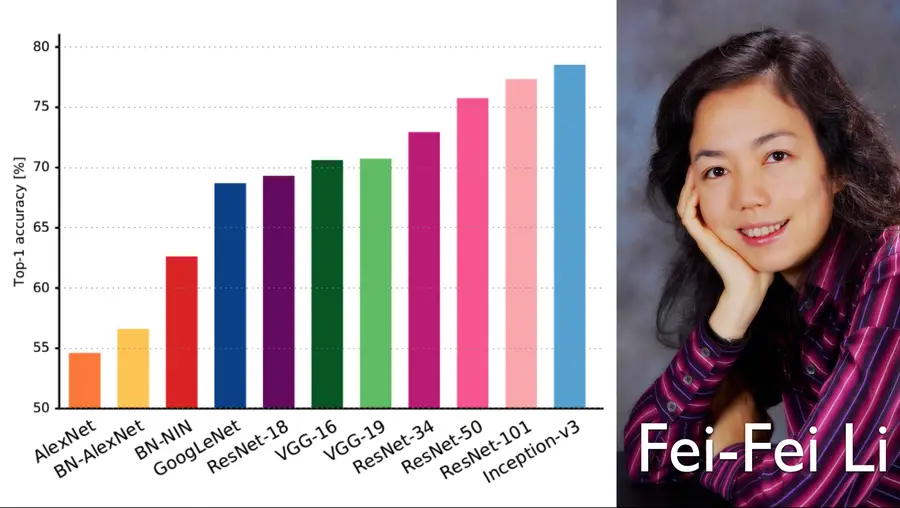
A few years ago, Professor Fei-Fei Li and her team released a particularly important dataset. This dataset, ImageNet, was a corpus of information about objects ranging from buses and cows to teddy bears and tables. Now machines could begin to recognise objects in the world. The data itself was extremely useful for training convolutional neural networks that were revolutionary new technologies for machine vision. But more than that, it was a benchmarking system because you could test one approach versus another, and you could test them in different situations. This capability led to the rapid growth of this technology in just a few years. It is now possible to achieve something similar when it comes to teaching machines about how to behave in socially acceptable ways. We can create a dataset of prosocial human behaviours to teach machines about kindness, congeniality, politeness, and manners. With young children, we usually teach simple social graces, such as remaining quiet in polite company, before we teach them right and wrong. In many ways, good manners are the mother of morality and essentially constitute a moral foundational layer.
The rise of the machines
There is a broader area of study called value alignment, or AI alignment. It is centred around teaching machines how to understand human preferences and how humans tend to interact in mutually beneficial ways. In essence, AI alignment is about ensuring that machines are aligned with human goals. We do this by socialising machines so that they know how to behave according to societal norms. There are some promising technical approaches and algorithms that could be used to accomplish this, such as Inverse Reinforcement Learning. In this technique machines can observe how we interact and decipher the rules without being explicitly told, effectively by watching how other people function. To a large extent, human beings learn socialisation in similar ways. In an unfamiliar culture, people will wait to see how others greet one another, or which fork they use, before doing it themselves. Children learn this way, so there are many great opportunities for machines to learn about us in a similar fashion.
Armed with this knowledge, we can move forward by trying to teach machines about basic social rules: that it isn’t nice to stare at people, that you should be quiet in a church or a museum, and that if you see someone drop something that looks important, you should alert them. These are the types of simple societal rules that we might ideally teach a six-year-old child. If this is successful, then we can move on to more complex rules. The important thing is to have some information that we can use to begin to benchmark these different approaches. Without it, it may take another twenty years to teach machines about human society and how to behave in ways that we prefer.
While the number of ideas in the field of Machine Learning is a positive sign, we cannot realise them in practice until we have the right quality and quantity of data. My nonprofit organisation, EthicsNet, is creating a dataset of prosocial behaviours which have been annotated or labelled by people of differing cultures and creeds across the globe. The idea is to gauge as wide a spectrum of human values and morals as possible and to try to make sense of them so that we can find the commonalities between different people. But we can also recreate the little nuances or behavioural specificities that might be more suitable to particular cultures or situations.
Acting in a prosocial manner requires learning the preferences of others. We need a mechanism to transfer those preferences to machines. Machine Intelligence will simply amplify and return whatever data we give it. Our goal is to advance the field of Machine Ethics by seeding technology that makes it easy to teach machines about individual and cultural behavioural preferences.
There are very real dangers if one ideologically driven group ever gains supremacy in establishing a master set of values for machines. Heaven help our civilisation if machine values were monopolised by extremists. It would be the ultimate cudgel to smash dissent and ‘wrongthink’. This is why EthicsNet needs to continue its mission: to enable a plurality of values to be collected and mapped, and to build a “passport of values” that lets machines meet our personal preferences. As a global community, we must resist any attempt to have values forced upon us via intelligent machines. In a time of intense polarisation, safeguarding a world where a plurality of values is respected requires the earnest efforts of dispassionate and sagacious people.
Trust makes coordination cheap

Human beings have been building tamper-proof records for a very long time. The ancient Sumerians had a form of token and crypto solution, 5,000 years ago. They would place small tokens, each representing a number or quantity, inside a clay ball called a bulla. The contents stayed hidden, and if the ball arrived whole you could be sure nobody had cracked it open and no tokens had been lost. Now, 5,000 years later, we are discovering a digital approach to solving a similar problem, so what appears to be novel is in many ways an age-old theme.
Double-entry accounting was invented twice, independently: by the merchant houses of Kaesong from around the 11th century, and in Italy by the late 13th. Nevertheless, the idea did not spread until Luca Pacioli, a Franciscan friar of the Early Renaissance, published it in 1494. He saw in its symmetry a divine mirror of the world: every entry in one account has a matching entry in another. Although this appears somewhat dull, the popularisation of the method of double-entry accounting actually enabled global trade in ways that were not possible before. If the two sides did not balance, you knew something was wrong. It made fraud a lot more difficult. Careful ledgers enabled banking practices and, eventually, the first banking cartels, which otherwise would not have been possible. One early example, two centuries before Pacioli, is the Bank of the Knights Templar, where people could deposit money in one place and pick it up somewhere else, a little bit like a traveller’s cheque. None of this would have been possible if we did not have distributed ledgers.
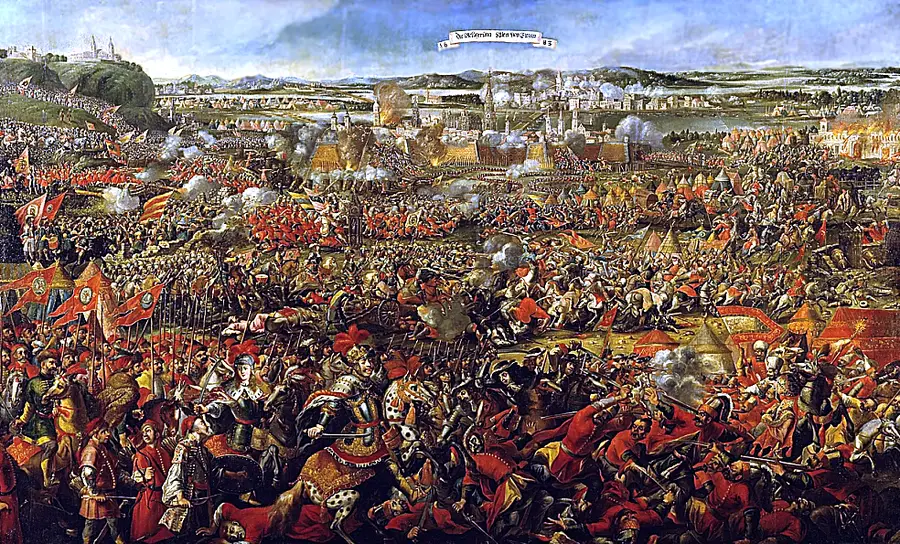
Several centuries later, at the Battle of Vienna in 1683, the Ottomans besieged Vienna for the second time, and they were repulsed. They went home in defeat, but they left behind something remarkable. A miraculous substance, coffee. Some enterprising individuals took that coffee and opened the first coffee house in Vienna. To this day, Viennese coffee houses have a very long and deep tradition where people can come together and learn about the world by reading the available periodicals and magazines. In contrast to a different trend of inebriated people meeting in the local pub, people could have an enlightened conversation. Thus coffee, in many ways, helped to construct the Enlightenment because these were forums where people could share ideas in a safe place that was relatively private. The coffee house enabled new forms of coordination which were more sophisticated. From the first coffee houses, we saw the emergence of the first insurance companies, such as Lloyd’s of London. We also saw a market grow up in the shares of joint stock companies such as the East India Company, and the London Stock Exchange grew out of one of those coffee houses.
This forum helped enable the Industrial Revolution. The Industrial Revolution was not so much about steam. The Ancient Greeks had primitive steam engines. They might even have had an Industrial Revolution from a technological perspective, but not from a social perspective. They did not yet have the social technologies required to increase the level of complexity in their society because they did not have trust-building mechanisms or the institutions necessary to create trust. If you are insured, losing your ship need not cost you your entire livelihood. That builds trust, which in turn builds security. In a joint stock company, those who run a company are obliged to provide shareholders with relevant performance information. The shareholders, therefore, have some level of security that company directors cannot simply take their money; they are bound by accountability and rules, which helps to build trust. Trust enables complexity, and greater complexity enabled the Industrial Revolution.
Editorial note (2026): this passage compresses the history. London’s first coffee house opened in 1652, three decades before the siege of Vienna, and Vienna’s own first coffee house in 1685. So the London coffee houses, and the insurance and share markets that grew out of them, did not descend from the coffee left at Vienna. The point the passage makes, that coffee houses became forums for new and more sophisticated coordination, does not depend on the sequence.
Never outsource the accounting
Today, we have remarkable new technologies built on triple-entry ledgers, which add a third record to every transaction: a shared, cryptographically sealed copy that neither party can quietly alter. These technologies mean we can build trust within society and use them to augment our existing institutions, in a decentralised form where, in theory, there is no single point of failure, control, or corruption. We can effectively franchise trust to parts of the world that lack reliable trust-building infrastructures: not every country has an efficient or trustworthy government, and these technologies can provide a firmer foundation for the social fabric where trust is not typically strong.
Trust-building technology is a positive development, not only for commerce but for human happiness. Trust and happiness go hand-in-hand, even when you control for variables like Gross Domestic Product. If you are poor but believe your neighbour generally has your best interest at heart, you will tend to feel happy and secure. Therefore, anything that we can use to build more trust in society will typically help to make people feel happier and more secure. It also means that we can create new ways of organising people, capital, and values in ways that enable a much greater level of complex societal function. If we are fortunate and approach this challenge in a careful manner, we might discover something like another Industrial Revolution, built upon these kinds of technologies. Life before the Industrial Revolution was difficult, and then it significantly improved. If we look at human development and well-being on a long scale, basically nothing happened for millennia, and then a massive improvement in well-being occurred. We are still extending the benefits of that breakthrough to the entire world, and we have done so faster as property rights and mostly free markets have expanded.
Economic development has also brought harm. Today, global GDP is over 80 trillion dollars, but we often fail to take into account the externalities that we’ve created. In economic terms, externalities are when one does something that affects an unrelated third party. Pollution is one example of an externality. Yet there are far larger sums in externalities which are not on the balance sheet. Entire species have been destroyed and populations enslaved. In short, there have been many unintended consequences and second- and third-order effects which have not been accounted for. To some extent, a significant portion of humanity has achieved all the trappings of a prosperous, comfortable society by not paying for these externalities. When we do pay, it is generally after the fact. Historically, we have had a tendency to create our own problems through lack of foresight and then tried to correct them after inflicting the damage. As Machine Ethics matures, we can combine it with Machine Economics, distributed ledgers, and Machine Intelligence to understand how one area affects another. In the 2020s and 2030s we will be able to start accounting for externalities in society for the very first time. This means that we can include externalities in pricing mechanisms to make people pay for them at the point of purchase, not after the fact. In turn, products or services that don’t create so many externalities in the world will, all things being equal, be a little bit cheaper. We can create economic incentives for people to be kinder to one another while achieving a profit, and thus overcome the traditional dichotomy between socialism and capitalism. We can still realise the true benefits of free markets if we follow careful accounting practices that consider externalities. That is what these distributed ledger technologies, along with Machine Ethics and Machine Intelligence, are going to enable.
Power and persuasion
These emerging technologies may one day be able to supplant the state’s monopoly of force. We would have to consider whether or not this would be a desirable step forward as not all states could be trusted to use their means of coercion in a safe, responsible manner, even now, without the technology. States exist for a reason. If we look at the very first cities in the world, such as Çatalhöyük in modern-day Turkey, these cities do not look like modern cities at all and are more akin to towns by comparison to contemporary scales and layout. They are more similar to a beehive in that they are built around little, square dwellings, all stacked on top of each other. There are no streets, no public buildings, no plazas, no temples or palaces. All the buildings are identical. The archaeological record tells us that people started to live in these kinds of conurbations for a while, and then they stopped for a period of about 800 years. They gave up living in this way, and they went back to living in very small villages, in little huts and more primitive dwellings. When we next see cities emerge, they are very different. In these next cities, such as Uruk and Babylon, boulevards, great temples, and workshops begin to take shape. We also see the development of specific sections of the city with certain industries and commercial areas. On a functional level, they were not too dissimilar from modern cities, at least in their general layout and in terms of the different divisions of labour that existed.
So, what was the real difference and why did people abandon cities for a time? If we consider that these were really nomadic societies where individuals and groups moved from place to place, then it is easier to understand that territory and personal possessions were not tied to a fixed location. Nomads had to take their property with them when they moved. So, these were very egalitarian societies where no single person had much more than anyone else. Subsequently, these nomadic people started living together and began farming.
Farming changed the direction of human development as we know it because it enabled people to turn one “X” of effort into ten “Y” of output. As farming progressed, some individuals enjoyed greater success in production output than others. This allowed them to accumulate more possessions and accrue greater wealth than their neighbours. These evolving inequalities engendered a growing tension in society, people started resenting one another, and it became necessary to find ways of protecting private property given the increasing risk of theft. This, in turn, necessitated the evolution of collective forms of coercion and the gradual evolution of the state. In its earliest forms, clans would protect themselves through the collective, physical protection of their territory and possessions. Centralised power enabled cities in their modern form, and the first cities failed because they had yet to develop this social technology.
10,000 years later we still have the same social technology, centralisation of power, and monopoly of force that generally governs the world. The state also enables order and has helped foster civilised society as we know it, so it can certainly be adaptive for the stability of civilisation. Nonetheless, the technologies we are now developing may enable us to move beyond monopolies of force and, paradoxically, return to a way of life that is a little bit more egalitarian. Outcomes might be less zero-sum in character, less about winning and losing and more about trade-offs. Generally speaking, trade can enable non-zero-sum outcomes. If I want your money more than I want my sausages, and you want the sausages more than your money, then we both come out ahead by trading. As we develop more sophisticated trading mechanisms, including Machine Economics technologies, we can begin to trade all kinds of goods. We can trade externalities, and we can even pay people to behave in moral ways or make certain value-based decisions. We can begin to incentivise all kinds of desirable behaviours by using the carrot instead of the stick.
Machine economics
Yet, for all the successful implementation of distributed ledger and blockchain technologies, the question of trust is still of central importance. In this wild west environment, trust begins with knowing other people. Who are the advisors of your crypto company? Do you have some reliable individuals in the organisation you can count on? Are they actually involved in your company? These are the questions that people want answers to, along with a close examination of your white paper (the document that typically functions as a ‘business plan’, merged with a technical overview). Most people lack the level of expertise required to really make sense of the mathematics. Even if they do have that expertise, they will have to vet a lot of code, which can be revised at any time. In fact, even in the crypto world, so much of the trust is built on personal reputation. Given that we are at an early stage of development in Machine Economics (e.g. blockchain), these technologies are only likely to achieve substantive results when they are married with Machine Intelligence and Machine Ethics. Such holistic integration will facilitate a new powerful form of societal complexity in the 2020s.
The first Industrial Revolution was about augmenting the muscle of beasts of burden and human beings by harnessing new sources of motive power. The second Industrial Revolution, the Informational Revolution, was about augmenting our cognition. It enabled us to perform a wide variety of complex information processing tasks and to remember things that our brains would not have the capacity for. That is why computers were initially developed. But we are now on the verge of another revolution, an augmentation of what might be described as the human heart and soul: augmenting our ability to make good moral judgements; augmenting our ability to understand how an action that we take has an effect on others; giving us suggestions of more desirable ways of engaging. For example, we might want to think more carefully about our everyday actions such as sending an angry email to a particular individual.
The industrialisation of happiness
If we can develop technologies that encourage better behaviour and might be cheaper and kinder to the environment, then we can begin to map human values and map who we are deep in our core. These technologies might help us build relationships with people that we otherwise might have missed out on. In a social environment, when people gather together, the personalities are not exactly the same, but they can complement each other. The masculine and the feminine, the introvert and the extrovert, the people who have different skills and talents, and possibly even worldviews, can share similar values. So, individuals are similar in some ways, and yet, different. In your town, there may be a hundred potential close friends. But unless you have an opportunity to meet them, sit down for coffee with them, and get to know them, you pass like ships in the night and never see each other, except for maybe an occasional tip of your hat to them. As Timothy Leary entreated us, “find the others.” Machines can help us find others in a world where people increasingly feel isolated. During the 1980s, statistically, many of us could count on three or four close friends. But today, people often report having only one or no close friends. We live in a world of incredible abundance, resources, safety and opportunities. Yet many people feel disconnected from each other, themselves, spirituality and nature.
By augmenting the human heart and soul, we might be able to solve those higher problems in Maslow’s Hierarchy of Needs, helping us find love and belonging, build self-esteem and move towards self-actualisation. There are very few truly self-actualised human beings on this planet, and that is lamentable because when a human being is truly self-actualised, their horizons are limitless. So, it will be possible to build, in the 2020s and beyond, a system that does not merely satisfy basic human needs but supports the full realisation of human excellence and the joy of being human. If such a system could reach an industrial scale, everyone on this planet would have the opportunity to be a self-actualised human being.
However, the technology is developing so rapidly that non-experts (politicians especially) are often unaware of how it might be regulated. Regulation is generally done in hindsight: a challenge appears and political elites respond after the fact. Principles matter because we decide them before a situation arises. When that situation is upon us, we have an immediate heuristic for how to respond. Sound principles, adopted in advance, make poor decisions far less likely.
AI-Übermensch
We must consider how machines interpret values: they may be rigidly consistent where humans see grey. We might even engineer machines that, on some occasions, are more moral than the average human being. The psychologist Lawrence Kohlberg reckoned that there were six stages of moral understanding. It is not about the decision you make but the reason why. In early life, you learn about correct behaviour and the possibility of punishment. As you grow older, you learn more advanced forms: loyalty to family and friends, recognition that an act is against the law or religious doctrine. Kohlberg reckoned that most people reach about stage four before they pass on. Only a few ever get beyond that. The benchmark of average human morality, then, is not set especially high. Most people are not aspiring to be angels; they are aspiring to be about as moral as the people around them. A keeping-up-with-the-Joneses morality. Now, if there are machines involved, and the machines are helping to suggest potential solutions that might be a tad more moral than many people have the ability to reason with, then perhaps machines might add to this social cognition of morality. It is thus possible that machines might help tweak and nudge us in a more desirable moral direction.
But algorithms can also become quietly oppressive, and how they will be used remains to be seen. People will readily rebel against a human tyrant or oppressor that they can point at, but they don’t tend to rebel against repressive systems. They tend to passively accept that this is the way things work. That is why it is important for such technologies to be implemented in an ethical manner and not in a quietly tyrannical way.
Finally, the development of Machine Learning may depend, to some extent, on where the technological breakthroughs are made. Europe has a genuine advantage here. There is a deep well of culture, intellect, and moral awareness in the history of the European continent, and a remarkable artistic and cultural heritage. As we begin to teach these naive little agents about society, that heritage matters. While the U.S. tends to think in terms of scale and China can produce prototypes at breakneck speed, Europeans tend to think in terms of meaning and of how things connect. We have a deep understanding of history, having been part of so many different positive and negative experiences. That gives Europe a real opportunity to be the moral and cultural leader of this new AI wave, which will rely heavily on Machine Economics and Machine Ethics technologies.
Machine Learning can bring enormous benefits to humanity. Misuse remains possible. There is a tremendous need to infuse technology with good moral judgement, the kind that can enrich our social fabric.
Correspondence
To send Nell a private note, select any passage above and choose ✎ Note, or write about the essay as a whole. Only Nell and the editorial team see notes.
← All essays