
An Open-Ended, Open-World Game, of Indeterminate Length
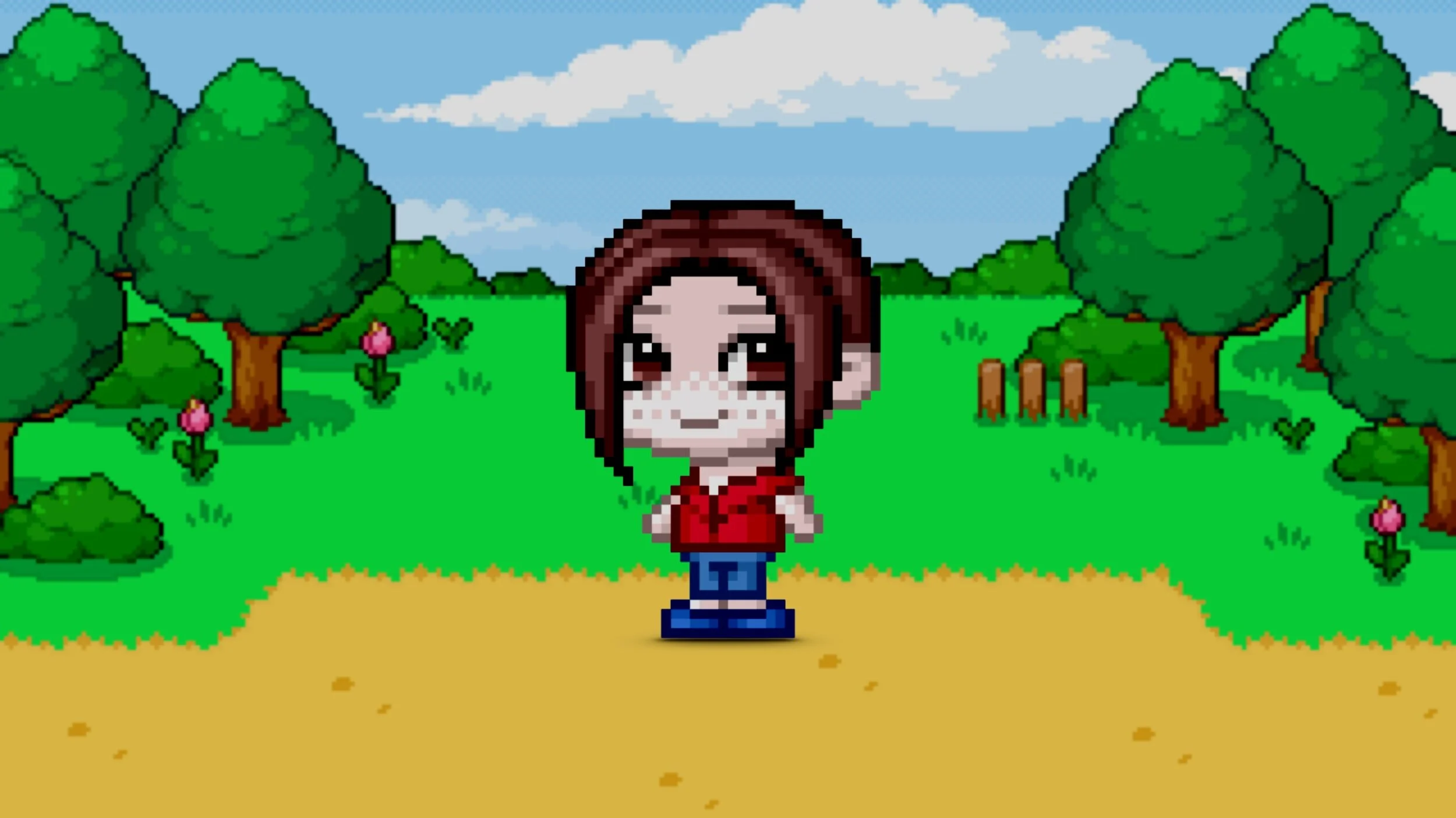
Over the years, I increasingly gain an impression of my lived experience as being game-like. I find myself accidentally playing ‘Nell Watson RPG’, a game whereby the player roams around an open world, accepting quests and requests for help from a variety of NPCs. Sometimes the player character will accept a reward after the fact, but often just knowing that the state of play is improved in some way is plenty in itself.
The game also includes a lengthy main quest to help ‘save the world’ through shepherding into being new social technologies. Along the way, various other players have joined up as a party, in order to effect some goal or mission. In doing this, I have learned how to better align my character's strengths with those of others in the party, each taking their respective ideal roles.
Some of these folks are industrious Tanks, full of brawn and vigor, others are Mages, with an eerie wisdom, but a weaker constitution. There are also perceptive and strategic Rogues, able to craft ingenious solutions to tough situations. Some players may seem underpowered on the surface, but when combined with others can produce strange poorly-understood buffs that somehow make the entire unit more cohesive.
As a Level 30-something Gnomish Bard of alignment Neutral Good, my role is to inspire others into fighting the right battles in the right way, and to sing memorable ballads of those who have accomplished great deeds – may they live in eternal memory. The role of the Bard is to minister to a challenging world, to fill others with hope, wisdom, compassion, perspective, and tools of resilience. The role is not to heal the world per se, rather to inspire others to find and join a quest to do so.
Adopting a ludic mentality means that one can enjoy the meta-experience of one’s life in new ways. One can play just for the loot, but it's empty in meaning. One may instead choose to ascribe virtual points to oneself, garnered through a combination of smiles induced, the empowerment of others to achieve flourishing ends, disagreements resolved, and disorder put right.
Sometimes one gets an unexpected Quick Time Event, where one can make a crucial difference in the moment. This is particularly pertinent if one has a strong and consistent alignment that provides natural decision heuristics. This is one reason why knowing one's values, and living them in daily practice too, is so important.
When I was younger, I had a troubled and painful life. When I was a child, I often wished that I could start again. Things had gone terribly wrong, and I despaired. Like when your game gets screwed up some how, and you just start messing around instead, because you can't wait to die and just start again.
I developed a strong Renegade alignment. This gave me the strength to push through difficult moments through force of will, but it held back the softer parts of myself from their full bloom. In healing my old unlicked wounds, a new kind of energy had room to take center stage, something more Paragon in nature.
When one almost gets run over by the proverbial bus, a moment of clarity ensues. The random caprice of mortality makes one keenly aware of playing for keeps in a persistent world. All good fun must come to an end.
Of course, much of our daily interactions in society are also games of sorts. Some of these are zero-sum, and others can have more co-operative outcomes.
One can think of ones vital statistics in certain ways also, to better play to one’s strengths:
Meat is how physically adept your body is.
Brains is how smart you are.
Spark is how "creative", alive, aware, unfettered one is.
Slack is how lucky and laid back one is, in the sense that higher Slack scores allows more affordance to roll with punches, and fewer issues coming ones way.
Mana is how much force of will / composure one has.
Some zero-sum scenarios:
In a sports competition, the higher Meat will win.
In a chess match, the higher Brains will win.
In a Locked Room puzzle, the higher Spark will win.
When the waiter trips while holding a bowl of soup, the lower Slack will get the soup dumped on them.
When two people each found new start-ups, the lower Mana will go under first.
When two people apply for a job interview (or a loan, or a date, or a scholarship), the lower Class gets rejected.
Doublestat effects:
- Picking a lock is a Meat+Brains roll.
- Surviving in the wild is a Meat+Spark roll.
- Surviving an illness is a Meat+Slack roll.
- Intimidating someone is a Meat+Mana roll.
- Attracting a mate is often a Meat+Class roll.
- Inventing a gadget is a Brains+Spark roll.
- Exploiting loopholes in a system is a Brains+Slack roll.
- Winning at strategy games is a Brains+Mana roll.
- Surviving in academia is a Brains+Class roll.
- Making it through a war zone is a Spark+Slack roll.
- Founding a startup is a Spark+Mana roll.
- Creating art is a Spark+Class roll.
- Bumming from couch to couch without losing friends is a Slack+Mana roll.
- Getting into a fancy nightclub is a Slack+Class roll.
- Being a sex symbol is a Mana+Class roll.
Different character classes have their own respective strengths and bonuses. Understanding to which class one natively belongs is important. A character that is obliged to work against its strengths can seem like a damp squib, until it finds the right role or environment where it can suddenly shine. One may also unlock prestige classes with mastery and experience – an ability to segue into a specific niche that maximises one’s abilities within a particular domain.
If social life may indeed be abstracted to a series of contracts and games, then creating models of the world that fit various scenarios into those may be useful. Regardless of the strategy, or even the desired outcome, the aesthetic counts. The journey is far more rewarding than the destination, and though one may lose many battles, the war remains undecided. Building oneself to ever finer self-mastery is what really counts.
“Well-makers lead the water (wherever they like); fletchers bend the arrow; carpenters bend a log of wood; wise people fashion themselves.”
Play your game of life as artfully as one might play an instrument. Make of oneself a work of art, and wear kindness as an aesthetic – a ribbon of goodwill, and a cape of humanitarian faith.