Mar 2022
Autonomous Divisions
Battle robots create several concerning legislative loopholes.
Blended Categories enable unexpected exploits
Militaries typically adhere to doctrines of:
Power (massed units, large-effect weapons)
Mobility (speed, manoeuvring, and encirclement)
Stealth (concealment, ambush)
Blitzkrieg tactics in WW2 were highly effective because they combined massed Power deployed dynamically through Mobility. Modern stealth bombers integrate all three elements, but are costly to build and operate. However, a new military doctrine is emerging:
Autonomy (swarms, expendability, harassment)
Autonomy means “rush in; if 90% fail it doesn’t matter”. It enables long-ranged or lurking weapons for stay-behind ambushes, combining aspects of land and sea mines. Autonomous swarms act as an expendable blitzkrieg, emerging suddenly, operating stealthily across land, sea, air, or space.
Mass-deployed drone armies can rapidly shift the balance of a conflict, especially autonomous weapons comparable in effect to manned military vehicles.
The deployment of 50,000 drones per month in the Ukrainian battlespace, many of which cost as little as $6,000 , is changing the face of conflict. Drones armed with inexpensive MANPADS -style warheads present an inexpensive and increasingly attractive alternative to conventional armies, especially when used in a defensive context. Iron Dome costs $100,000 for every $800 rocket it intercepts. This asymmetry facilitates autonomous wild weasel -style tactics. Autonomous (potentially nuclear-powered) stealth carriers can deploy drones in various configurations, waiting weeks or months before sudden activation.
Together, these developments may make conventional war increasingly untenable. Ukraine has been an inflection point in which the state of warfare has pivoted from asymmetric, high tech forces totally dominating the battlefield back to ground forces duking it out via artillery and drone strikes. This stalemate, and the utter carnage of drone-driven conflicts that maim more often than kill, will drive the transition to AI-driven warfighting.
Yet reduced human agency in conflict could enable robotic Einsatzgruppen to murder civilians -- extreme loyalty is unnecessary and insider witness risks are lower. Policy organisations must ensure humans always remain in the loop and no machine autonomously decides to kill. This grows harder as machines are increasingly handed the job of autonomously finishing what a human started, sidestepping issues of jamming and pilot error.
A snap ban on AI weapons in war could backfire. A conflict with fewer human warfighters may be less trauma-inducing, both physically and emotionally.
Autonomous systems provide powerful defensive mechanisms for smaller, vulnerable states against larger aggressors. An international ban may weaken good-faith actors while leaving bad-faith actors and terrorist groups unaffected -- or strengthened.
AI has applications in conflict well beyond overt warfare. Fifth-generation hybrid warfare focuses on demoralising enemies while inoculating one’s own group, using plausibly deniable means not directly linkable to any actor.
We live in a world where malware , including other neural networks , can now be secretly embedded in AI systems, potentially enabling tacit unauthorised control at a later time, perhaps even enabling a plausibly deniable false flag operation. AI also enables Zersetzung -style demoralisation and gaslighting attacks upon persons of interest such as dissidents, and influential foreign nationals.
Banning overt AI in conflict may drive evolution toward more devastating covert applications. Tragic as such losses are, nations can recover from the death of soldiers or civilians. Recovering from demoralisation attacks that foment permanent polarisation and societal breakdown of trust may be impossible. These invisible weapons of mass destruction could produce apocalyptic outcomes -- a consequence legislators must weigh before targeting only the overt kind.
The Ukraine war and allied weapons supply efforts -- without deploying soldiers -- expose a loophole in international law. Legally, deploying soldiers differs greatly from deploying weapons. Autonomous weapons are classified like rifles, creating a legal conundrum.
A race to the bottom on safety is possible, with little regard for civilians during or after engagements. The spectre of autonomous weapons terrorising populations is real, especially concealed ‘ stay-behind ’ area-denial units that deploy latently. Such units may be designed to maim but not kill, thereby evading legislation on ‘lethal’ autonomous weapons.
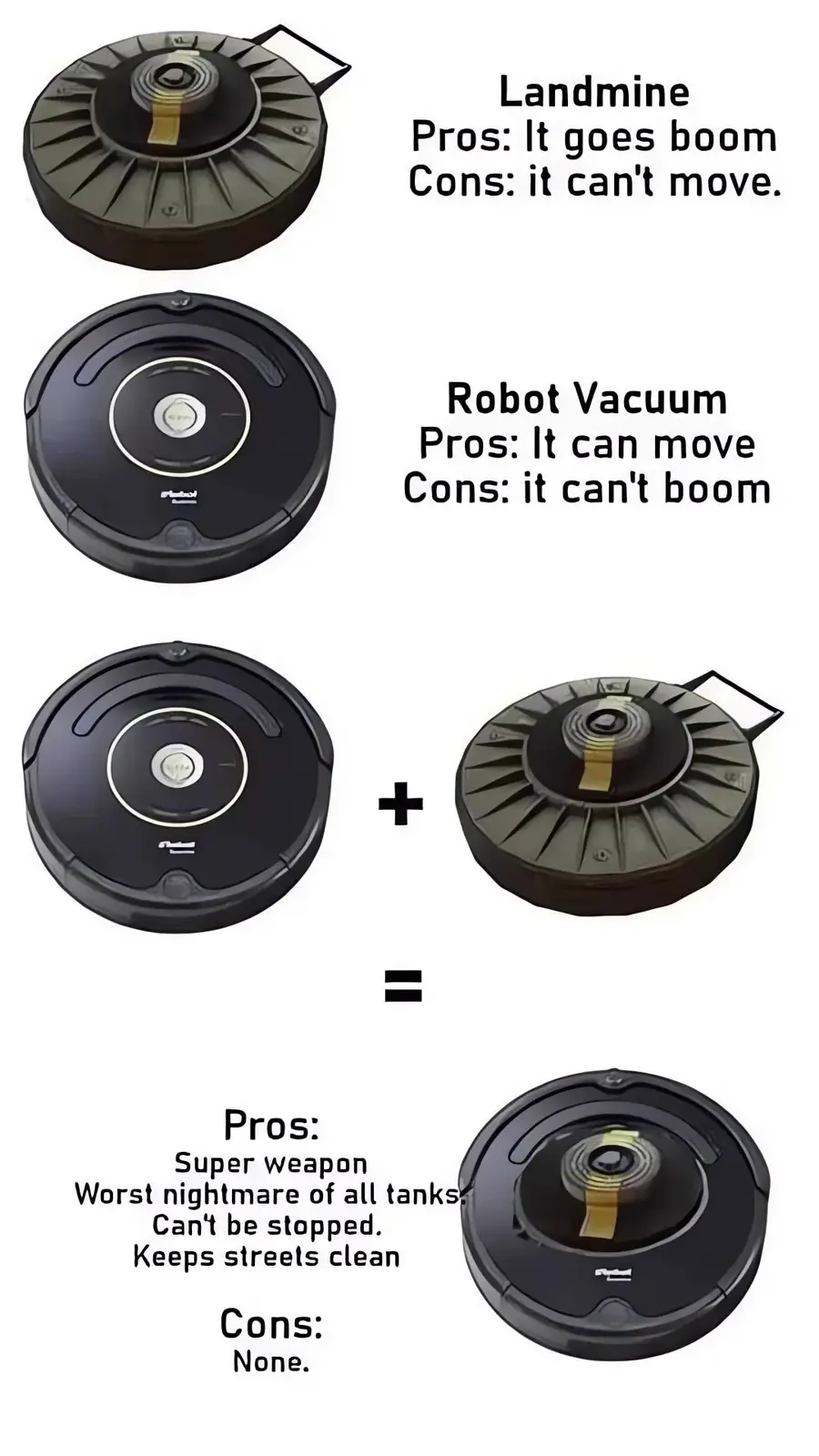
Dual-use technologies such as ‘ autonomous firefighting and rescue equipment ’ or ‘ weed-blasting laser drones ’ might be provided for one purpose but rapidly repurposed.
Addressing these insidious applications is crucial as war becomes increasingly tacit and deniable -- an invisible war of demoralisation and infrastructure attacks. Future conflict will be two-pronged: clandestine attacks on civilians, and drone-oriented autonomous doctrine when things turn hot.
Another disruptive aspect is the inexpensive routine launch of large payloads into orbit. This may make kinetic bombardment ‘rods from God’ economically feasible, and deployable to orbit on short notice as an intimidation tactic, with yields comparable to a small nuclear weapon, yet without necessarily invoking Mutually Assured Destruction or Non-Proliferation Treaties. Even non-state actors could hold people to ransom by threatening to drop dense but ostensibly legitimate payloads (like tungsten parts or Radioisotope Thermoelectric Generator isotopes) onto precarious geological faults, dams, or major cities. Coordinated responses to such threats are important, hopefully in a manner less likely to risk Kessler Syndrome.
Regulators and legislators must act now, as these weapons create a 21st-century version of trench warfare. The Geneva Conventions urgently need updating to protect civilians from lethal autonomous weapons and demoralisation techniques alike.
Correspondence