Jan 2016
Pragmatic Optimism
Success requires the optimism to reach into the future and pull it back to the present.

The Luminous Path Towards Enlightenment 2.0
It’s easy to be cynical, and to sneer at exuberance and deride it as irrational.
We don’t have flying cars, but we have something better. We don’t have moon bases yet, but we have developed the means to access space at a hundredth the cost. Our robotic butlers are extant, if ethereal in the Cloud.
Even ten years ago these developments could have been written off as infeasible. If the engineers behind them had abandoned hope, we would have none of it.
Every act of creation requires optimism. We make reasonable assumptions, engineer the steps, and pull the future back to the present.
Optimism is the foundation of courage
Rates of change are different in varying areas. Fashion is fast and highly unpredictable. Technology snakes along development curves in a phugoid pattern on the narrow scale. Human nature is glacial, yet does change. Geological changes are slowest of all, yet may be the most overwhelming.
Most predictions fail to account for these facts. There is often also a mistaken focus on projecting from a linear present instead of an exponential future.
Take for example the forecasts of solar energy price per watt that have been consistently underestimated year after year, along with wind. Solar PV capacity is now almost an order of magnitude greater than what was expected by the IEA just seven years ago.
This is a problem of mindset, not data. Predict from recent trends and you miss the bigger picture: the function generating the curve.
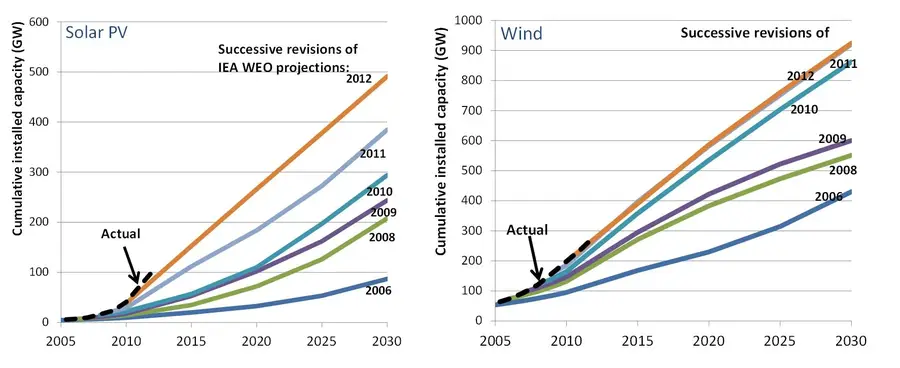
Source: The Energy Collective
We are living through a surge in machine learning. It is easy to forget that for almost two generations there was very little development in AI because early perceived successes had few practical outcomes. Worth being wary of hype in the short term, while remaining aware that technological displacement is inevitable over time.
Disruptive technologies appear from nowhere, yet look obvious in hindsight once the curve driving them becomes clear.
Humanity has a vast amount of learning and growth ahead, as we each learn to make full use of that rich resource, the prefrontal cortex.
And yet, looking back on history, the progress of our species is salient.
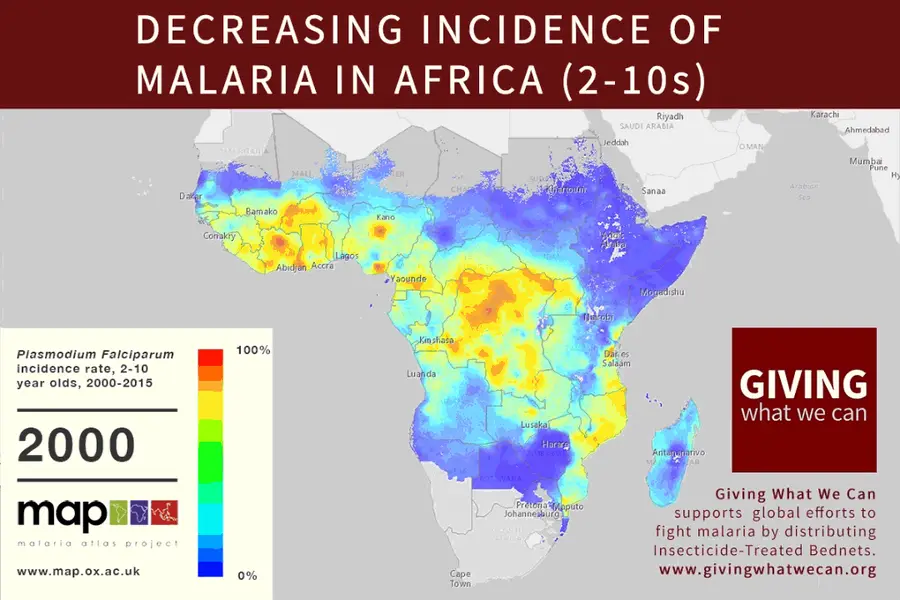
Source: Giving What We Can
Data like this gives me hope that genuine good can be achieved by the coordinated efforts of decent, diligent people over a sustained period.
The best approach therefore may be moderation in the short term, and wild exuberance in the long term.
I’d like you to meet my buddy, my pal, Petrarch:
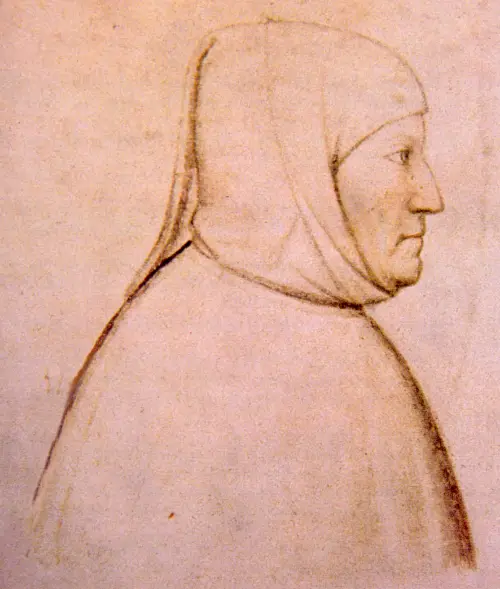
My fate is to live among varied and confusing storms. But for you perhaps, if as I hope and wish you will live long after me, there will follow a better age.
Petrarch could see the dark age he lived in while aspiring to an illuminated future. He managed it by discovering the letters of Cicero, preserved from a thousand years before, which pointed to a lost golden age. Petrarch had physical evidence to guide him in his belief that the mass knowledge and culture of civilization could rise again.Had Cicero’s letters been lost to history, or had Petrarch not discerned their significance and then evangelized upon them (by writing to his friend Cicero, though long deceased), the renaissance (rebirth) as we know it might never have occurred.
Little glory of the past can meaningfully guide us to a better future, but perhaps science fiction serves as a modern proxy for Cicero’s letters. Countless current developments are inspired by luminaries of the form: Asimov, Clarke, Dick, Gibson, and Roddenberry. Every one inspired generations of engineers to build bigger, and boldly.
Courage to strive to make the better world, glimpsed by our imaginations, through doing, not just wishing.
Nous sommes tous Petrarch.
The Renaissance rekindled a culture that had been maintained for centuries only by religion, within monastic orders. The world had been too fragmented and chaotic for great cultural works (Beowulf a notable exception), while Europe struggled through a reconquista that took generations.
With the Black Death came sorrow, but also great freedom. The balance of power in society shifted from the oligarchs, as people gained great agency in choosing what they wished to spend their lives upon. For the first time in a thousand years common people were able to move to another town or city, and perhaps learn a trade. Commerce blossomed despite ongoing military chaos, such as the Protestant Reformation.
The new bourgeoisie discovered that wealth could buy status through patronage of the arts. Culture became secular again, and commissioning great works became the ultimate Veblen good for the wealthy.
Access to a rich cultural education made hard-bitten people curious, and worldly. Fashion became important, and being part of the cognoscenti for fancy foreign memes had status. Coffee arrived in Europe at the gates of Vienna courtesy of the marauding Ottoman empire, and the coffeehouse became a place of relaxed discussion and sharing of ideas conducive to well-planned business.
This shift in worldview helped shape a more rational, peaceful, and curious flavour of human being. Scientists, humanists, reformists, abolitionists, industrialists: people grounded in the everyday world, committed to improving it here and now, hereafter be damned. The Enlightenment had arrived.
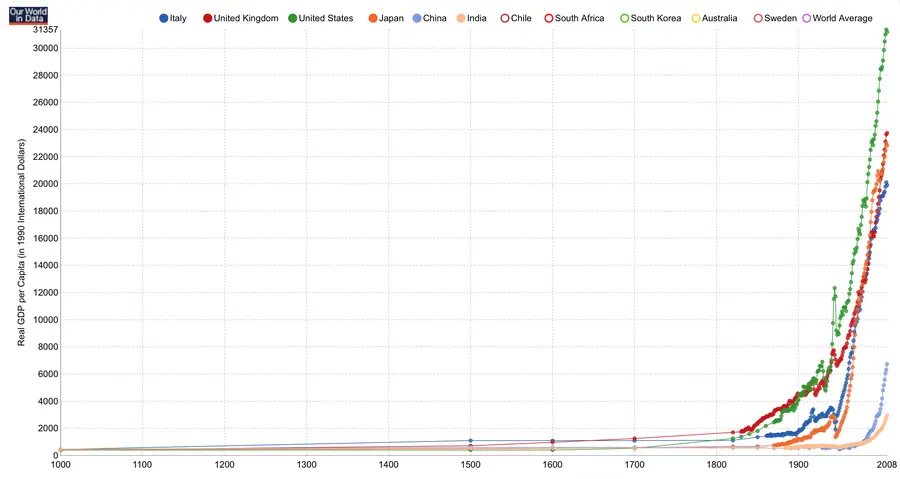
WORLD GDP IN THE SECOND MILLENNIUM Source: Our World in Datahttp://www.ourworldindata.org/data/growth-and-distribution-of-prosperity/gdp-growth-over-the-last-centuries
The last quarter-millennium has seen world GDP explode near-exponentially for most of us, over successive waves of industrial revolutions. Rational enquiry, and the patience of an engineering psychoclass, have created profound wonders and elevated even the most lowly among us to a lifestyle safer and more comfortable than that of emperors a century past.
We are on the verge of another great leap.
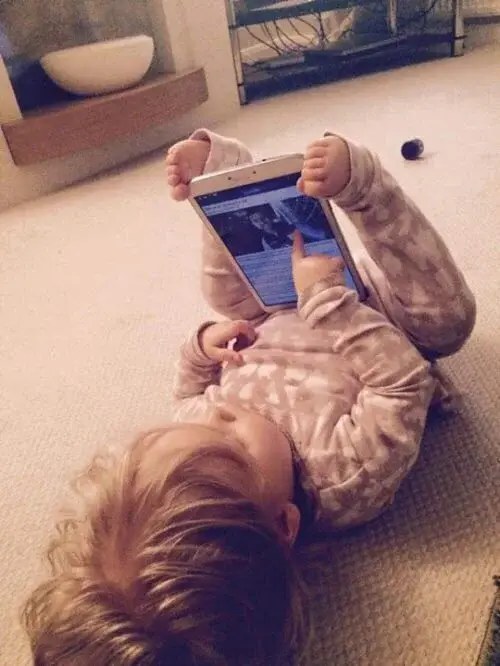
via Scott Kerr
Those true digital natives, the toddlers who today talk to the iPad as much as they dab at it with a finger. It is their minds that are becoming like a machine. Many would be concerned at this, but I think it will be OK. Their minds will work differently from ours, but they will be rich in capacity rarely seen in prior generations.They will be able to sift through information and absorb knowledge with tremendous ease, and they will have grown up in partnership with machines. They will know machines to be a natural extension of themselves, and it is having that always-on connection to the cool System 2 mindset of the machine, the use of which feels as natural and slick to them as using System 1.
This fusion of machines and menschen will enable the next great leap in our global civilization. They are here to fix the mess we made and the jobs we never finished.
Within the next quarter century we will conquer the cancer, the virus, the gene, and discover the fountain of youth itself.
We will enjoy a second enlightenment as we find ways to cultivate less-traumatised minds, both human and machine, that possess unbridled creativity, unlimited means to breathe it into reality, and the wisdom to apply it well.
We will escape the necessity, and the desire of stealing the lifeblood of innocent animals to fatten our own bellies.
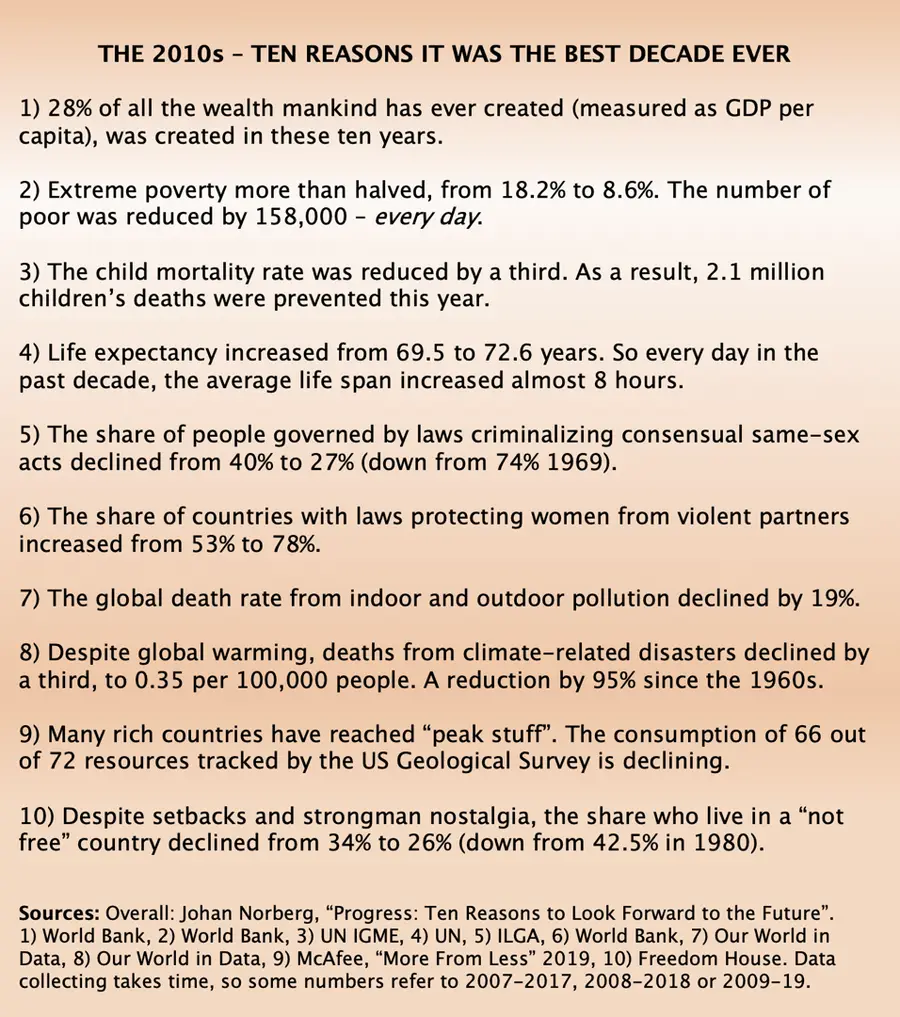
We will declare the higher moral awareness that our new capacities enable, and direct it to our daily lives.
We will stumble along our murky path with graceless uncertainty, and without doubt some will suffer from losing their place in the old order.
But despite the necessary pain of growth, we will muddle through, by grace of the human spirit and a mindset that cares for future suffering as well as the present. We have a decent chance of everything being OK, because someone -- you, perhaps -- cared enough to work to guide us toward the best of all possible futures.
We stand on a bridge between Petrarch’s wistful backward glance and the far-flung dream of escaping the natural limits of the human condition. How pleased I am to have arrived in a better age than Petrarch’s, though still I yearn for the better yet to come.
Here’s to our fantastic journey, friends.
Download As PDFCorrespondence